Australian dog breeds include compact terriers and working dogs developed for demanding jobs. This guide separates Australian origins, breed names and popular crosses, then helps you think through everyday care.
A quick guide to Australian breeds
These are useful starting points for research, rather than a ranking of family suitability. Follow each profile for more detail and assess the individual dog you are considering.
| Breed | Background | A practical question |
|---|---|---|
| Australian Cattle Dog | Cattle-herding dog, also known as a Blue Heeler. | How will I provide training, appropriate activity and time to settle? |
| Australian Kelpie | Active livestock-working dog. | What outlets does this particular dog need beyond a short walk? |
| Australian Stumpy Tail Cattle Dog | A distinct Australian herding breed with a naturally short tail. | What is known about this dog’s working background and behaviour? |
| Australian Terrier | A small, spirited terrier. | How will I arrange grooming, training and safe exploration? |
| Australian Silky Terrier | A small Australian companion with terrier ancestry. | Can I keep up with coat care as well as everyday activity? |
For Australian registration and breed standards, consult Dogs Australia. Registry groups and recognition are not interchangeable between countries.
Working history is a starting point
Cattle Dogs, Kelpies and Stumpy Tail Cattle Dogs were developed for livestock work. That history is useful context when discussing training and the home environment. It does not supply a safe universal number of exercise minutes, calories or hours of sleep.
The Working Kelpie Council’s history describes the imported working Collies behind the Kelpie’s development. If you are considering a working-line dog, ask about the actual parents, upbringing and demands of the individual dog.
Where does the Koolie fit?
The Koolie is another Australian working-dog tradition. The Koolie Club of Australia maintains information about its background and registration. A breed club’s records and another registry’s recognition are different things; ask which organisation issued any papers you are shown.
Is the Australian Shepherd Australian?
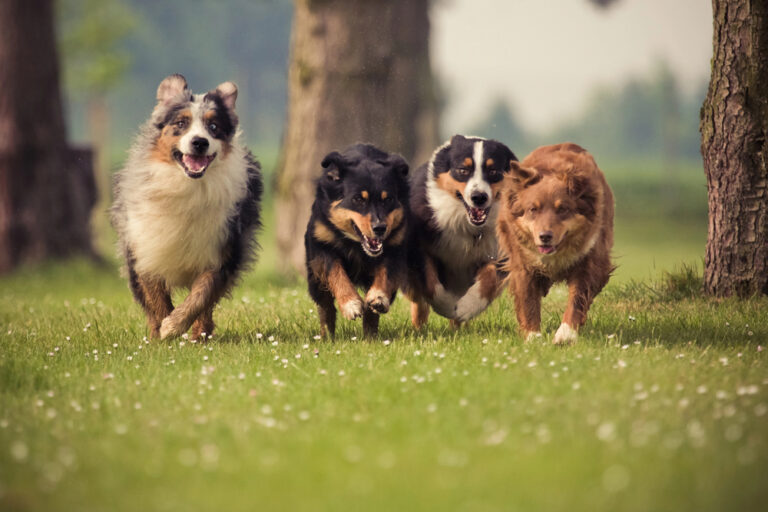
The name can be misleading. The modern Australian Shepherd developed in the United States, with a history that involved dogs arriving via Australia. The AKC profile places its development in California. It belongs in a discussion of familiar Australian-named dogs, but should not be presented as originating in Australia.
What about the Cavoodle?
“Cavoodle” usually refers to a Cavalier King Charles Spaniel–Poodle cross, also called a Cavapoo. A crossbreed label does not guarantee a particular coat, adult size, temperament or health outcome. Ask about the individual dog and relevant health testing rather than relying on the name.
Plan a day you can actually provide
Build a draft routine around your household, then adapt it with the dog’s current carer or veterinary team. The tool below schedules the durations you choose. Unscheduled time is available time, not a measurement of sleep.
Enter your details to see the result.
Saving on this device
Your journal stays in this browser on this device. It is not uploaded or synced. Anyone using this browser profile can open it. Clearing site data, private browsing or browser storage cleanup can erase it. Keep a downloaded backup.
Notes drafts save automatically after you stop typing. Other results save only when you choose “Save to journal”.
CSV, copy and ChatGPT
To use ChatGPT, copy the plan and paste it into a new chat. No data is sent automatically.
Open ChatGPT ↗Calculations run in this page. Local saving is your choice; no account or automatic sharing.
Before you decide
- Meet the dog and discuss its behaviour in everyday situations.
- Ask which breed-relevant health screening has been completed.
- Include grooming, training, quiet time and backup care in your plan.
- Review feeding with the actual food label and the dog’s weight and body condition.
Continue with the meal planner, body-condition record or care notes. For names and official profiles, browse the AKC breed directory.